
Fortune\u0027s Weave Gameplay & Combat
A field guide to how the game actually plays: the Free Time and Main Battle loop, the two battle systems, Blaze Arts, class certification and the choices that matter on a first run.
What the gameplay loop is
Fire Emblem: Fortune's Weave gameplay blends the series' grid combat with a calendar-driven life-sim layer. Each stretch of the campaign alternates a Free Time phase with a Main Battle. Free Time is measured in Turns of six in-game hours, and the deadline before the next battle is expressed as a number of those Turns, so planning a week is really planning how many blocks you can spend before the fight.
That structure is the backbone of the whole game: the same systems you manage in Free Time (supports, classes, exploration, materials) are what decide the battle that follows. The deeper mechanical breakdown lives on the Core Systems page; this page is the entry point that explains how the pieces fit together.
Free Time and Main Battles
A Turn of Free Time is six in-game hours. You spend it on supports, exploration, class study or rest, and the calendar counts down to the next Main Battle. Because the deadline is given in Turns rather than a real clock, the practical skill is deciding which activities pay off before the next fight instead of hoarding them.
Main Battles are the tactical grid encounters the series is built around. They are where routing, positioning and unit matchups decide the outcome, and the preparation you did in Free Time is what makes a difficult map manageable.
Two battle systems: tactical combat and Clash
Tactical combat is the grid battle system. Clash is the dungeon system, closer to a party-based turn-based RPG: the party shares one HP pool, losing it forces an evacuation, and the available commands cover Attack, Combat Arts and a Link action that costs Link Points. Both systems draw on the same stats and class kit, so a unit strong in one tends to pull its weight in the other.
Blaze Arts: Combat Arts paid for with HP
Blaze Arts are character-specific Combat Arts that cost the user's own HP instead of weapon durability. Using them fills a Blaze Meter: at half the meter you get Overblaze, which raises stats and opens up certain Arts, and a full meter triggers a Burst that cuts maximum HP in half for the rest of the battle. The trade is deliberate, which is why they are best saved for turns where the burst in damage is worth the survivability cost.
Classes and certification exams
Changing class happens through certification exams rather than automatic promotion. The exam gates are what make class choice a planning decision on every route, and the full class list with its tiers is on the Classes page. Unit matchups against the Weapons and Spells list also shape which certification you chase first.
Recruitment is conditional
Units join on route-specific combinations of support level, renown rank and negotiation steps rather than by clearing a map, which is more conditional than in most entries in the series. That makes the recruitment planner the first tool most players open, and the full roster with its conditions is on the Characters page.
Exploration, farming and materials
Exploration is where materials come from. Overworld Search points drop the leaves and meats that feed Leda's drink-recipe chain and other uses, and the gathering routes are mapped on the Leaf Materials page. Crop farming is the other steady supply line, covered on the Farming page.
Beginner tips that follow from the systems
- Spend Free Time on supports and exploration before each Main Battle. The Turn deadline is the real resource, and both activities pay off in the next fight or the one after.
- Certify a class early on the units you plan to lean on, because the exam gates are what unlock your strongest tools.
- Keep renown banked. Recruitment and several late unlocks are renown-gated, and it is easier to plan around a known balance than to scramble for it.
- Learn the Blaze Meter rhythm. Overblaze is a stat spike worth building toward, while a Burst halves max HP, so time the full meter for a turn where the damage spike wins the map.
Four routes and the war act
The campaign splits into four routes, one per Flame Lord: Cai, Dietrich, Theodora and Leda. Each route runs twelve chapters, followed by a shared six-chapter war act and a closing act. The chapter-by-chapter path and the route structure are on the Walkthrough page, and the replay and carryover rules are on the Post-game page.
See it played: official combat and a beginner walkthrough
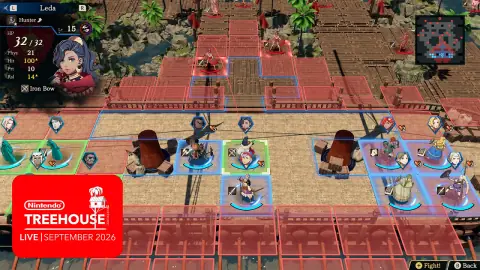
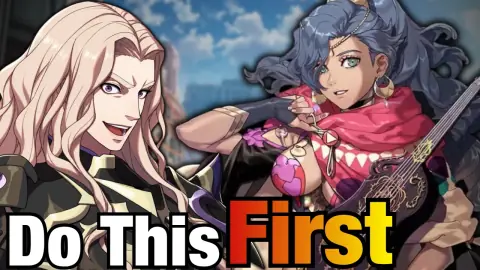
Two videos with verified English captions that show the loop in motion. The first is Nintendo's own Treehouse battle demo; the second is a creator early-game guide. The notes below were transcribed from their English subtitles.
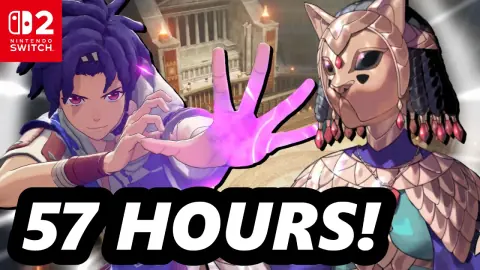
A long-play reviewer's impressions of the same loop: the game runs two battle systems — the classic grid SRPG and the Clash system (pick one unit, chain combos, group HP, counterattack loop) — with dungeon crawling that mines resources and replenishes over time, and a class system you can max and re-spec. Difficulty ranges from Normal to Hard Classic, where keeping every unit alive changes the whole tone (transcribed from the English subtitles).
What the official demo shows
- Battle maps play like a board game: each unit moves a set number of spaces, can attack, some have support moves, and may wait a turn.
- Placement is the puzzle — the danger radius (red arrows) shows where enemies can reach, so keep fragile units out of it.
- Unit roles differ: tankier units block and absorb hits up front, while magic users are strong but fragile and best kept behind a wall while attacking at range.
What the beginner guide covers
- Plan each Free Time around the turn limit: the arena (skill training), inn (supports), temple (blessing) and port (item trade) are recurring priorities.
- Bird-time missions and bulletin-board quests are easy to skip but worth doing every cycle.
- Class changes are gated by renown and can be revisited, so experiment with weapon and class builds.
- Finishing a route once unlocks the Boons of Salvation, which boost experience and lower item costs on later runs (the creator's recommendation).
Frequently asked questions
- Is Fire Emblem: Fortune's Weave on PC?
- No. It is a Nintendo Switch 2 console exclusive, released on September 17, 2026, and there is no PC version. If you are on a PC, the only way to play is on a Switch 2; third-party emulators are not something this site covers.
- What is the core Fire Emblem: Fortune's Weave gameplay loop?
- Each stretch of the campaign alternates a calendar-driven Free Time phase with a Main Battle. Free Time is measured in Turns of six in-game hours that you spend on supports, exploration and preparation, and the deadline before the next battle is counted in those Turns.
- How do the two battle systems differ?
- Tactical combat is the grid battle the series is known for. Clash is the dungeon system: it plays like a party-based turn-based RPG where the party shares one HP pool, losing that pool forces an evacuation, and your options are Attack, Combat Arts and a Link action that costs Link Points.
- How do Blaze Arts work?
- They are character-specific Combat Arts paid for with the user's own HP instead of weapon durability. Using them fills a Blaze Meter: half full grants Overblaze, which raises stats and opens up certain Arts, and a full meter triggers a Burst that cuts maximum HP in half for the rest of the battle.
- Is there a New Game Plus?
- Not in the traditional sense. The replay route is Descend Again on the title screen, which restarts at a higher difficulty and carries over map exploration, unlocked classes, Boons of Salvation and sidequest progress once a Part I route is complete. The full rules are on the post-game page.
Where to go next
The mechanical detail behind every system above is on the Core Systems page, the roster and recruitment conditions are on the Characters page, and the class tiers are on the Classes page. For the route and chapter path, see the Walkthrough.